
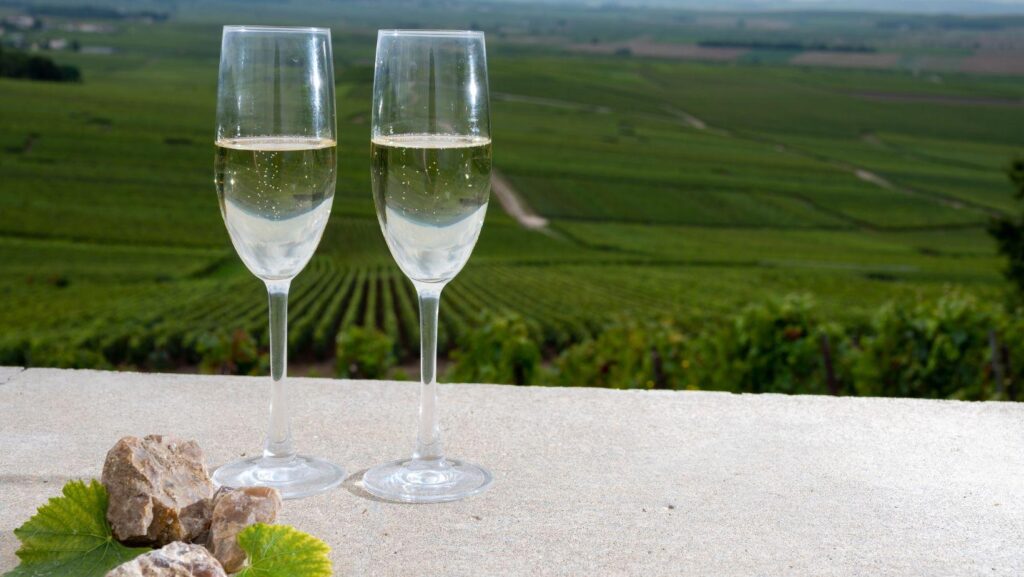
Champagne is often introduced through celebration. A cork lifted from the bottle, a glass raised at golden hour, a toast shared between friends. But to see Champagne only as a drink is to miss the deeper story of the region.
In northern France, between the grand cathedral city of Reims, the elegant avenues of Épernay, and the quiet vineyard villages that ripple across the hillsides, Champagne is a place where craft, culture, architecture, history, and landscape all meet. It is a destination shaped not only by wine, but by generations of growers, makers, artists, cellar masters, and communities who have turned patience into an art form.
For travelers drawn to creative culture, Champagne offers something especially compelling. It is not loud or performative. Its beauty is layered. You find it in the chalk cellars beneath the city streets, in the carved details of a Gothic cathedral, in the rhythm of vineyard rows, and in the careful choices behind every bottle.
A Region Built on Craft
Champagne is one of the world’s most famous wine regions, but its identity is rooted in process. The wines produced here are not simply grown and bottled. They are shaped through time, blending, fermentation, aging, and extraordinary technical skill.
That makes the region fascinating for anyone who loves the creative process. Like painting, ceramics, music, or design, Champagne requires both discipline and intuition. There are rules, traditions, and methods, but within those boundaries, producers still make countless creative decisions.
Which grapes should be blended? How long should the wine age? Should the final expression feel bright and mineral, rich and layered, delicate and floral, or bold and structured?
Visiting Champagne gives travelers a chance to see this invisible artistry up close. The experience is not only about tasting wine. It is about understanding how a finished work comes into being.
Reims: Where History and Grandeur Meet
Reims is often one of the first stops for travelers exploring Champagne, and for good reason. The city carries a sense of ceremony. Its cathedral, Notre-Dame de Reims, is one of France’s great Gothic masterpieces and was the coronation site for many French kings.
Walking through Reims, the connection between history and place feels immediate. The city has endured war, rebuilding, reinvention, and preservation. Its architecture tells a story of resilience, while its Champagne houses reveal another kind of legacy: one built underground, in vast chalk cellars where bottles age quietly for years.
For culture-focused travelers, Reims offers a rewarding mix of monumental history and living tradition. A morning might begin with cathedral stained glass and end with a cellar tour that feels almost architectural in its own right. The underground crayères, carved into chalk, are not just storage spaces. They are part of the region’s cultural landscape.
Épernay: The Elegance of Champagne’s Avenue
If Reims feels grand and historic, Épernay feels polished and intimate. The town is best known for the Avenue de Champagne, a graceful street lined with some of the most famous Champagne houses in the world.
But Épernay is more than a prestigious address. It is a place where the business, beauty, and ritual of Champagne are all on display. Behind the ornate façades are miles of cellars, centuries of expertise, and a strong sense of regional pride.
For travelers who love design, atmosphere, and heritage, Épernay has a cinematic quality. It invites slower exploration: a walk along the avenue, a tasting in a historic house, a long lunch, a quiet moment looking out toward the vineyards.
This is the kind of travel that rewards attention. The details matter here.
The Villages Beyond the Famous Names
While Reims and Épernay are essential, some of Champagne’s most memorable experiences happen beyond the major towns. Smaller vineyard villages such as Hautvillers, Aÿ, and others throughout the Montagne de Reims, Vallée de la Marne, and Côte des Blancs offer a more intimate view of the region.
This is where Champagne becomes less of a symbol and more of a living landscape.
In these villages, travelers can begin to understand the differences between terroirs, grape varieties, and producer styles. One hillside may be known for Pinot Noir, another for Chardonnay. One grower may create wines with precision and freshness, while another may focus on richness and depth.
For creative travelers, this is often the most inspiring part of the journey. It reveals how place shapes expression. The same region, the same category of wine, and yet so many distinct voices.
Champagne as a Cultural Experience
What makes Champagne especially interesting is that it sits at the intersection of luxury and labor. The finished bottle may feel glamorous, but the work behind it is agricultural, technical, physical, and deeply human.
This tension is part of what gives the region its depth. Champagne is refined, but it is not detached from the land. Its beauty depends on vineyards, weather, harvest timing, cellar work, and years of care.
A well-planned visit allows travelers to move beyond surface-level tastings and into more meaningful experiences. Instead of simply asking, “Which Champagne do I like?” visitors can begin asking better questions:
What makes this village different from the next?
How does a cellar master create consistency while still allowing character?
Why does aging on lees change the texture of the wine?
How do small grower-producers express their own creative philosophy?
These questions turn a wine trip into a cultural journey.
How to Approach a Champagne Visit
Champagne is easy to reach from Paris, which makes it tempting to visit as a quick day trip. But travelers who care about culture, food, and craft may find the region far more rewarding with extra time.
A thoughtful itinerary might include Reims for history and architecture, Épernay for iconic Champagne houses, and smaller villages for grower-producer visits and vineyard landscapes. The best trips balance famous names with lesser-known estates, structured tastings with relaxed meals, and guided experiences with time to simply wander.
It is also worth planning carefully. Many of the most interesting Champagne experiences are not the kind you casually stumble into. Private visits, smaller producers, and more personal tastings often require advance arrangements.
For those beginning to map out a deeper wine-focused journey, Into the Vineyard’s guide to the best wineries and vineyards to visit in Champagne, including Reims, Épernay, and beyond offers a helpful starting point for understanding which places are most worth your time.
Why Champagne Belongs on a Creative Travel List
Creative travel is not only about visiting museums or attending performances. It is about seeking out places where human imagination has shaped the world in lasting ways.
Champagne is one of those places.
Its creativity is not always obvious at first. It is quiet, precise, and patient. It lives in the blending room, the vineyard, the cellar, the architecture, and the rituals passed from one generation to the next.
To visit Champagne with curiosity is to see how culture is made over time. It is to understand that beauty can be both celebratory and disciplined. That a landscape can become a language. That a glass of wine can carry history, geology, craftsmanship, and memory all at once.
For travelers who want more than a checklist experience, Champagne offers a journey into the art of making something enduring.
And that may be the region’s greatest lesson: the most meaningful forms of culture are rarely rushed. They are cultivated.