
Where Food Becomes Folklore
The ocean has always whispered stories to those who listen. Centuries before food trends and overnight shipping, coastal communities shaped their lives around the rhythms of the tide. Fish wasn’t just food — it was identity, economy, and ceremony.
In today’s world, where so much of our food arrives processed and packaged, there’s a quiet cultural revival underway. People are beginning to return to the roots of food — to learn the story behind what they eat, to connect with origin, and to treat meals as a kind of creative ritual. Nowhere is this shift more poetic than in the way we approach seafood.
The Ritual of the Catch
To embrace seafood is to embrace impermanence. It’s a cuisine that doesn’t wait. A fish too long in transport loses its soul. A clam not handled right closes up. There’s something artistic in that — a demand for presence, timing, and care.
That’s why so many conscious eaters now seek to buy seafood from curated sources that understand this delicate choreography. Not just freshness — but integrity. Whether sourced from a digital marketplace with transparent sourcing or a local dockside fishmonger, this act becomes part of a broader cultural commitment to craft, to sustainability, and to honoring food as art.
Every Oyster Has an Accent
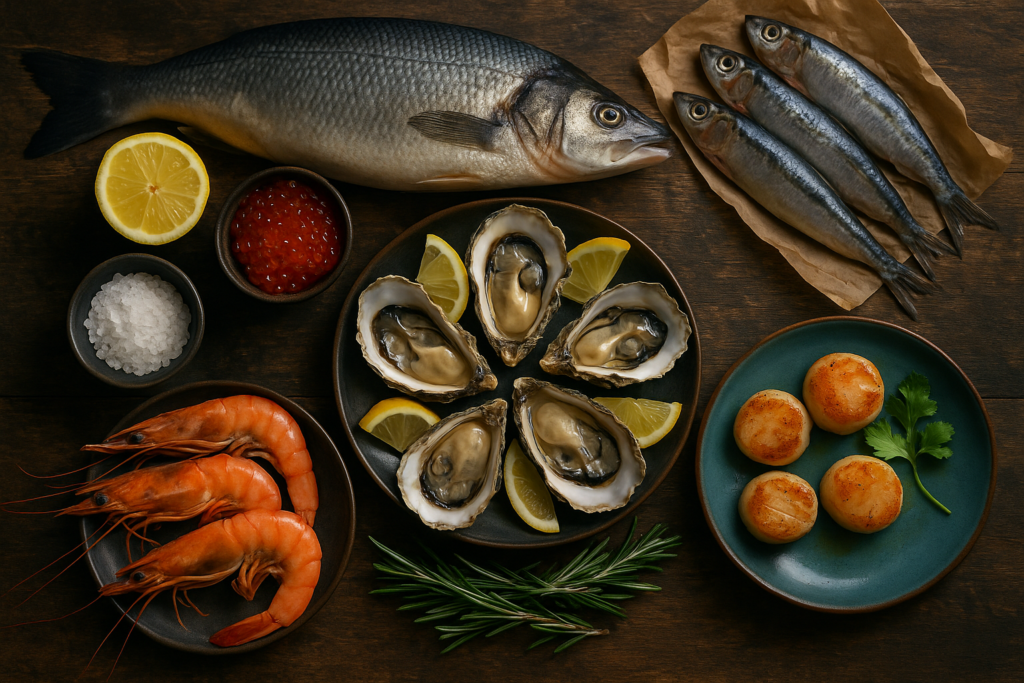
Seafood is terroir in motion. Just as wine reflects its soil, oysters echo their waters. The brininess of a Nova Scotia shell, the buttery finish of a Chesapeake Bay mollusk — these are edible maps of place and time. It’s not just flavor; it’s culture you can taste.
When you choose to buy seafood with intention, you’re not just selecting a protein. You’re selecting a dialect, a history, and a piece of the ocean’s living language. And in doing so, you elevate your kitchen into a cultural studio — one where your hands can translate heritage through heat, salt, and flame.
Cooking as Cultural Expression
In the creative life, cooking is performance art. The sizzle of scallops, the brushstroke of a glaze, the silence while someone takes that first bite — this is improvisation at its most intimate. Seafood, with its fragile structure and bold flavor, requires care and creativity. It’s less about recipes and more about rhythm.
For cultures that grew up near water — from Southeast Asian islands to Mediterranean coasts — seafood recipes are generational poetry. Passed down not in cookbooks, but in gestures: how to test freshness with your nose, when to salt with intuition. To adopt these rituals today is to join a lineage of makers, caretakers, and storytellers.
Eco-Consciousness Meets Artisan Practice
Just as we now support slow fashion and handmade design, many creatives are applying the same principles to what’s on their plate. Sustainability is not a trend here; it’s a mindset. Choosing sardines over swordfish, mussels over overfished tuna, isn’t just environmentally wise — it’s artistically brave.
To buy seafood this way is to curate your kitchen like you would a gallery: with meaning, minimal waste, and reverence for the source. It’s also a way to resist the factory-farmed homogeneity of supermarket life and reclaim food as an expression of ethics and identity.
Food as Cultural Continuum
At Creative Culture Tribe, we understand that creativity doesn’t live in silos. It’s in the brushstroke, the beadwork, the bassline — and the broth. Seafood, in its rawest form, calls us back to that continuum. It asks us to look closer, cook slower, share deeper.
When we plate a dish that echoes a coastal village, a grandmother’s recipe, or a forgotten flavor, we participate in a sacred act of remembrance. We transform our tables into gathering places not just for people, but for memory, geography, and emotion.
Final Thoughts: Salt. Soul. Story.
Food will always be more than food. And seafood, perhaps more than any other category, brings us face to face with that truth. It spoils fast, demands skill, and rewards intimacy. It’s culinary jazz — you don’t just follow steps; you listen, you feel, you interpret.
So the next time you prepare a dish from the sea, slow down. Ask where it came from. Consider who fished it, how the tides moved, what rituals surrounded its harvest. Then light a candle, pour a glass, and honor the small act of transformation unfolding in your kitchen.
Because in the world of creative living, even a shrimp can carry a song.